Metabolic health and cognition are connected through fuel supply. The brain is about 2 percent of body weight and uses roughly 20 percent of the body’s resting energy, so blood sugar swings, inflammation, thyroid function, and nutrient status all show up in mood and thinking. Most of it is measurable.

What Is Metabolic Psychiatry?
Metabolic psychiatry is a research framework that examines how metabolic health influences brain function, mood, cognition, and emotional regulation. It looks at insulin regulation, inflammation, mitochondrial function, nutrient status, sleep physiology, and hormones as inputs to how a person thinks and feels.
It is an active academic field with dedicated clinical research programs at institutions including Stanford Medicine. The premise is not that mental health is “really” metabolic. It is that the brain is an organ with demanding energy requirements, and the systems that supply and regulate that energy are measurable.
At Sante Health, that framework informs a metabolic evaluation, and the boundary around it is deliberate:
The Sante Method’s approach to mental wellness is informed by principles of metabolic psychiatry, a framework that examines how metabolic factors influence brain function, mood, cognition, and mental performance. This is not psychiatric treatment or therapy. We do not diagnose or treat mental health conditions. Our focus is on identifying and optimizing metabolic contributors that may affect cognitive and emotional well-being, in collaboration with your existing mental health providers when appropriate.
If you already work with a psychiatrist or a counselor, this sits alongside that care rather than replacing any part of it.
How Does Metabolic Health Shape Mood and Cognition?
Through fuel delivery, and the effect is more immediate than most people expect.
The brain is roughly 2 percent of body weight and uses about 20 percent of the body’s resting energy, almost all of it as glucose. It also stores very little of its own fuel, so it depends on a steady supply arriving from the bloodstream.
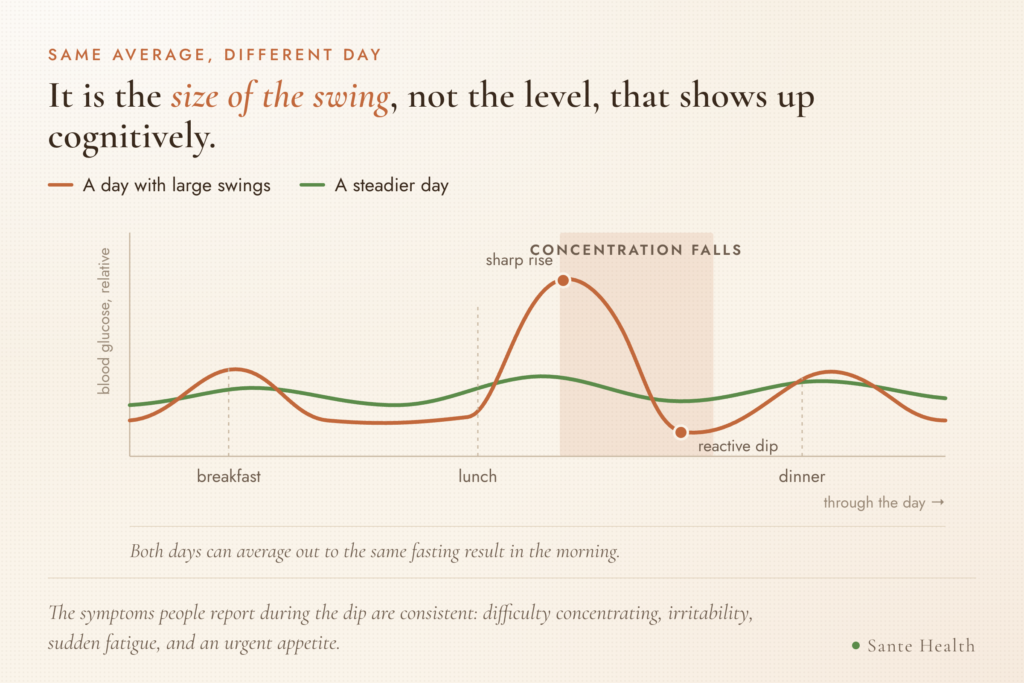
That dependency is why glucose variability shows up cognitively. A large, fast post-meal rise is often followed by an overshoot in the other direction as insulin clears it. The symptoms people report during that dip are consistent: difficulty concentrating, irritability, sudden fatigue, and an urgent appetite. It is the familiar mid-afternoon crash, and it is a fuel-delivery problem rather than a willpower problem.
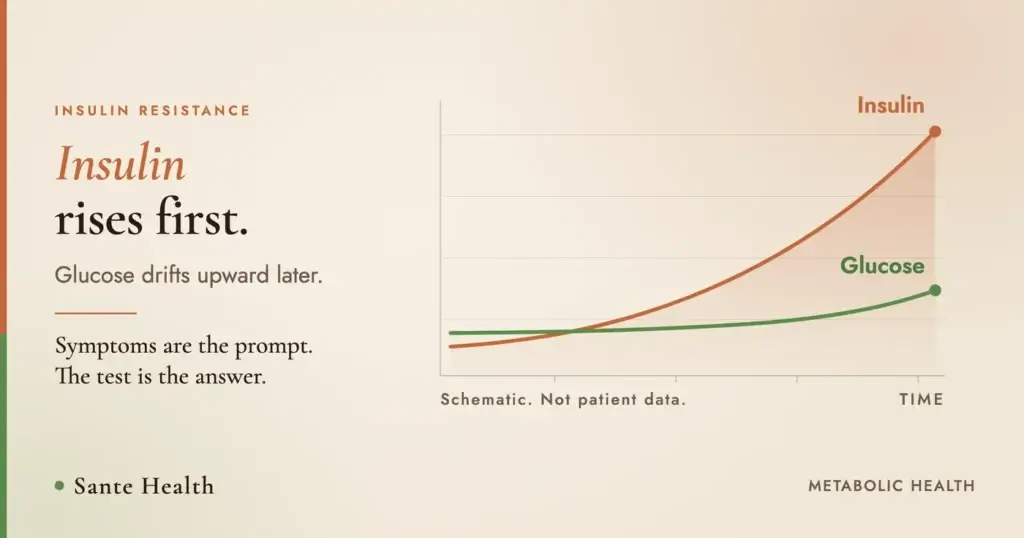
Insulin resistance widens those swings and makes them more frequent. It also acts on the brain more directly, because insulin signaling occurs in brain tissue and participates in memory and metabolic regulation there, not only in muscle and liver.
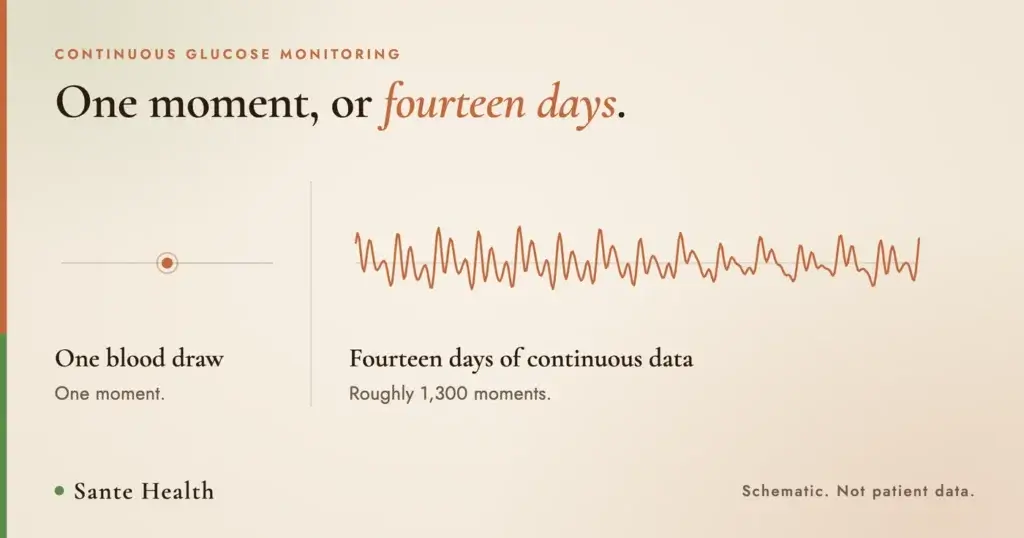
The practical implication is that someone whose fasting glucose reads normal can still be running large daily swings, and neither a single fasting glucose nor an HbA1c will show it. That is part of what a comprehensive metabolic assessment adds to routine bloodwork.
Is There a Link Between Insulin Resistance and Depression?
Research has found an association, and the direction appears to run both ways.
A 2021 Dutch cohort study published in the American Journal of Psychiatry followed adults with no history of depression and found that higher insulin resistance at baseline, measured three different ways, predicted a higher rate of new-onset major depressive disorder over roughly nine years of follow-up. That design matters because insulin resistance was measured first and depression came later.
The relationship is bidirectional in practice. Depressed mood tends to degrade sleep, activity, and food choices, each of which worsens insulin sensitivity, which feeds back into mood and cognition.
Two things this does not mean. It does not mean insulin resistance causes depression in any individual person, and it does not mean metabolic work substitutes for mental health care. What it does mean is that a metabolic evaluation is a reasonable thing to have in the picture, particularly when symptoms are persistent and the standard workup has come back unremarkable.
Which Metabolic Factors Affect Mood and Cognition?
Inflammation. Multiple meta-analyses have found inflammatory markers, including CRP and interleukin-6, running modestly elevated on average in people with depression compared with controls. Inflammatory signaling influences neurotransmitter availability and the motivational circuitry that governs effort and reward, which is consistent with the flat, low-drive presentation many people describe.
Thyroid. Underactive thyroid function commonly presents as slowed cognition, low mood, and fatigue. A TSH-only screen shows the pituitary’s signal but not how much active hormone is available at the tissue, which is why free T3 and free T4 add information.
Nutrient status. B12 and folate are required cofactors in methylation and neurotransmitter synthesis, and deficiency in either can present with cognitive and mood symptoms. Iron deficiency limits oxygen delivery. Low vitamin D and low omega-3 status have both been associated with mood symptoms in observational research.
Sleep. Experimental sleep restriction measurably reduces insulin sensitivity in healthy adults within days. Sleep sits upstream of nearly everything else on this list, which is why it is usually the first thing worth addressing.
Stress physiology. A disrupted cortisol rhythm raises blood glucose, fragments sleep, and increases inflammatory signaling at the same time, which is how one input degrades three separate systems.
Which Markers Are Worth Measuring?
If cognitive and mood symptoms have persisted and a basic panel came back clean, these are the markers that most often add something:
| Marker | What it addresses |
|---|---|
| Fasting insulin with fasting glucose (HOMA-IR) | Insulin resistance, before glucose or HbA1c move |
| HbA1c | Average blood sugar over roughly three months |
| hs-CRP | Low-grade systemic inflammation |
| Full thyroid: TSH, free T3, free T4, thyroid antibodies | Thyroid output and conversion, not just the pituitary signal |
| B12, folate, ferritin, vitamin D, RBC magnesium | Cofactor availability for energy production and neurotransmitter synthesis |
| Sex hormones and a cortisol pattern | Hormonal transitions and stress physiology |
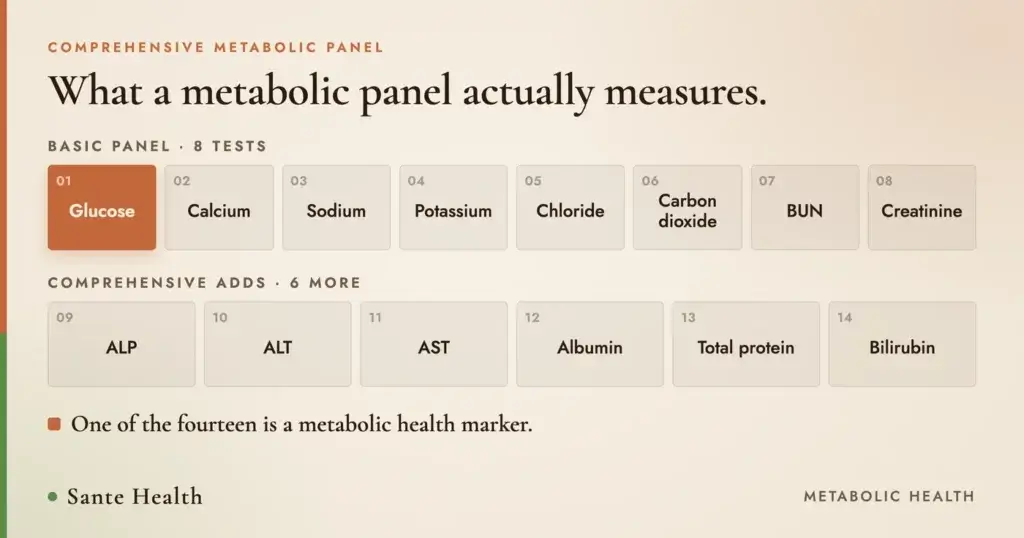
A broader picture of how these fit together is in what metabolic health actually measures. None of these markers diagnose a mental health condition. They describe the physiologic conditions the brain is operating under.
Frequently Asked Questions
Is metabolic psychiatry the same as psychiatry?
No. Metabolic psychiatry is a research framework for understanding how metabolic factors influence brain function. At Sante Health it informs a metabolic evaluation, not psychiatric treatment. We do not diagnose or treat mental health conditions.
Does this replace my psychiatrist or counselor?
No. The work runs alongside your existing providers, with coordination on request, and looks specifically at the metabolic contributors that may be affecting how you think and feel. Patients who need psychiatric care should continue receiving it from their existing providers.
Can improving blood sugar improve focus?
Stabilizing glucose reduces the size of post-meal swings, and the mid-afternoon crash that follows a large swing is one of the most commonly reported cognitive symptoms. Whether that produces a noticeable change depends on how much of a given person’s symptom burden comes from glucose variability versus sleep, thyroid, inflammation, or nutrient status.
Which nutrient deficiencies affect mood and thinking?
B12 and folate are the two most frequently implicated, since both are required cofactors in neurotransmitter synthesis. Iron deficiency, low vitamin D, and low omega-3 status are also associated with cognitive and mood symptoms. All are measurable, and testing is more reliable than supplementing on a guess.
When should I see a doctor about changes in mood or thinking?
Book an appointment if symptoms are persistent, worsening, or interfering with work or daily function. Seek prompt medical attention for sudden confusion, disorientation, a sudden severe headache, weakness or numbness on one side, or trouble speaking, since those need urgent evaluation rather than a metabolic workup.
What happens in a metabolic evaluation for cognitive symptoms?
A Metabolic Psychiatry Consultation runs 90 minutes by telehealth and takes place after labs are completed, so the visit is spent on interpretation and planning. It covers metabolic, inflammatory, nutrient, and hormonal context and ends with a plan built around the modifiable contributors.
How to Get the Metabolic Side Evaluated
If focus and mood have shifted and the standard workup came back unremarkable, the metabolic picture is worth measuring rather than assuming. Sante Health delivers this care by telehealth across California, with labs drawn locally and results reviewed with the clinician who ordered them.
Schedule a Metabolic Psychiatry Consultation, or contact the Sante Health team with questions first.
Or call 805-370-0000.
If you are experiencing a mental health crisis, call or text 988 (Suicide & Crisis Lifeline), contact your existing mental health provider, or go to the nearest emergency department.
About the author. Lovelle Valencia, NP, FNP, PMHNP is a board-certified Nurse Practitioner with specialized training in functional medicine (IFM), metabolic health (A4M), and psychiatric mental health. Professional affiliations: AANP, ANCC, A4M, IFM.
This article is for informational purposes only and does not constitute medical advice, diagnosis, or treatment. Consult a qualified healthcare provider for personalized guidance.